


"Small Needle, Big Impact: Unveiling the Material Secrets of Disposable Endoscopic Injection Needles"
The disposable endoscopic injection needle is a commonly used auxiliary instrument in digestive endoscopy procedures, mainly used for submucosal injection, saline elevation, sclerotherapy injection, and hemostatic agent injection. Its structural design and material properties directly affect the safety and effectiveness of clinical procedures.
·Needle tip: Made of medical-grade stainless steel, the needle tip angle design (e.g., 30°) helps with puncture efficiency and reduces tissue damage.
·Inner tube: Connects the needle tip and the injection handle, responsible for drug delivery, often made of transparent material to facilitate observation of blood return.
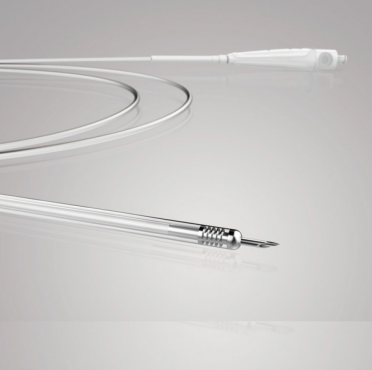
² Material Selection: Commonly used medical-grade stainless steel or high-strength polymers, requiring good biocompatibility and chemical stability.
² Transparency: Transparent design facilitates observation of blood return, ensuring accurate injection site placement.² Inner Diameter and Wall Thickness: The inner diameter must meet the drug flow requirements, and the wall thickness must ensure sufficient strength to prevent deformation or breakage of the inner tube during puncture.
² Lubricity: A smooth inner wall reduces resistance to drug flow and ensures smooth injection.
² Material Selection: Low-friction materials such as polytetrafluoroethylene (PTFE) are commonly used to ensure smooth passage through the endoscope forceps channel.
² Flexibility and Strength: Sufficient structural strength must be maintained while maintaining a certain degree of flexibility to prevent breakage or deformation during operation.
² Sealing: The fit between the outer tube and the inner tube must be tight to prevent drug leakage.
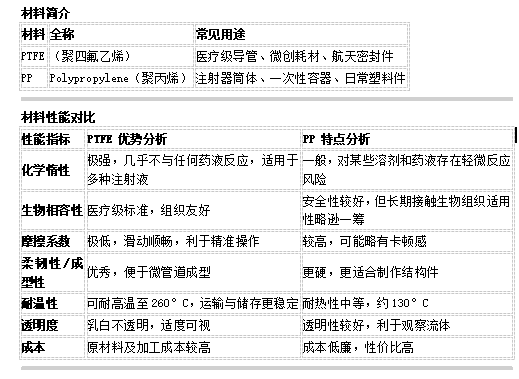
**Application Recommendations** · Recommended use of PTFE:
o. For medical procedures requiring high purity of the injection solution and minimal tissue irritation;
o. For procedures requiring smooth sliding (e.g., frequent entry and exit from the operating channel);
o. For high-end products or export-oriented needs;
o In situations where doctors value the feel of the device. · PP is recommended for: o Centralized procurement for cost-sensitive applications; o Basic clinical applications with high usage and frequent consumable replacements; o Projects with short- to medium-term use and broad applicability; o Customers with limited budgets but requiring maintenance of basic performance.
As a medical CDMO with independent PTFE extrusion capabilities, Yike not only provides high-performance PTFE catheters but also flexibly matches customer needs, supplying economical PP versions:
·✅ Stable supply of the entire product line;There is no best material, only the most suitable choice. PTFE represents the ultimate in performance and safety, while PP is the preferred choice in terms of cost-effectiveness and applicability. Yike understands the real needs of different clinical scenarios and has a dual-track product strategy, offering both PTFE and PP tubing to help customers achieve "precise material selection and scientific cost control." We will continue to focus on technological innovation and manufacturing process optimization to provide customers with customized, high-performance catheter solutions.


