PET heat shrink tube is increasingly gaining traction in the medical field. Why?
A heat shrink material that provides "high strength, wear resistance, and excellent dimensional accuracy"
You may not have noticed, but a key material is beginning to appear in many familiar catheter support layers, insulation components, and even the assembly processes of medical devices: PET heat shrink tube.
Why is this seemingly ordinary engineering plastic heat shrink material becoming increasingly popular in medical manufacturing?
What is PET heat shrink tube?
PET, short for polyethylene terephthalate, is a thermoplastic polyester. Compared to common fluoroplastic heat shrink materials (such as FEP and PTFE), PET possesses higher mechanical strength and dimensional stability, making it particularly advantageous in thin-wall molding and high-precision support structures.
Four Core Advantages of PET Heat Shrink tube:
① Thin Wall Thickness Control
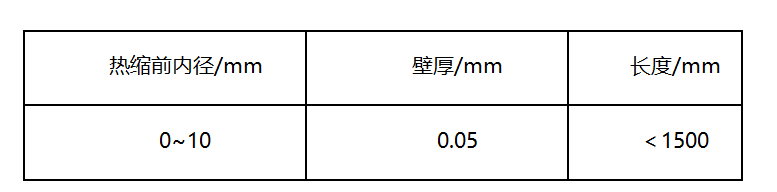
PET allows for extremely thin wall thickness designs, ensuring support while avoiding excessive increases in the outer diameter of the conduit.
② High Insulation
PET has a low dielectric constant and high breakdown field strength, providing stable electrical insulation protection. It is widely used in medical energy conduits, electrical components, and high-voltage insulation protection, ensuring safety and reliability.
③ High Mechanical Strength and Abrasion Resistance PET's tensile strength and hardness are superior to most heat shrink materials, providing additional support and abrasion resistance in conduit manufacturing, making it particularly suitable for applications requiring enhanced structural strength.
④ High Transparency
PET maintains good transparency even under thin-walled conditions, facilitating visual alignment and observation during manufacturing and ensuring the precision of multi-layered catheter assembly.
Application Scenarios: Applications of PET Heat Shrink tube
• Protection of Key Components
• Welding, Fusion, and Connection of Medical Catheters
• Insulation Protection of Active Instruments
• As an outer layer of instruments, such as the outer layer of push rods, covering the ends of springs and braided wires to prevent wire breakage
• Transparent Covering of Catheters and Needles (Prevents Scratches, Facilitates Observation)
• Anti-Slip Covering for Surgical Instruments
• What We Can Do
As a professional CDMO (Conduit Manufacturing Organization) for catheter manufacturing, we have been using FEP heat shrink tube in large quantities in multiple product structural designs and offer the following support capabilities: PET Heat Shrink tube 1.3:1